
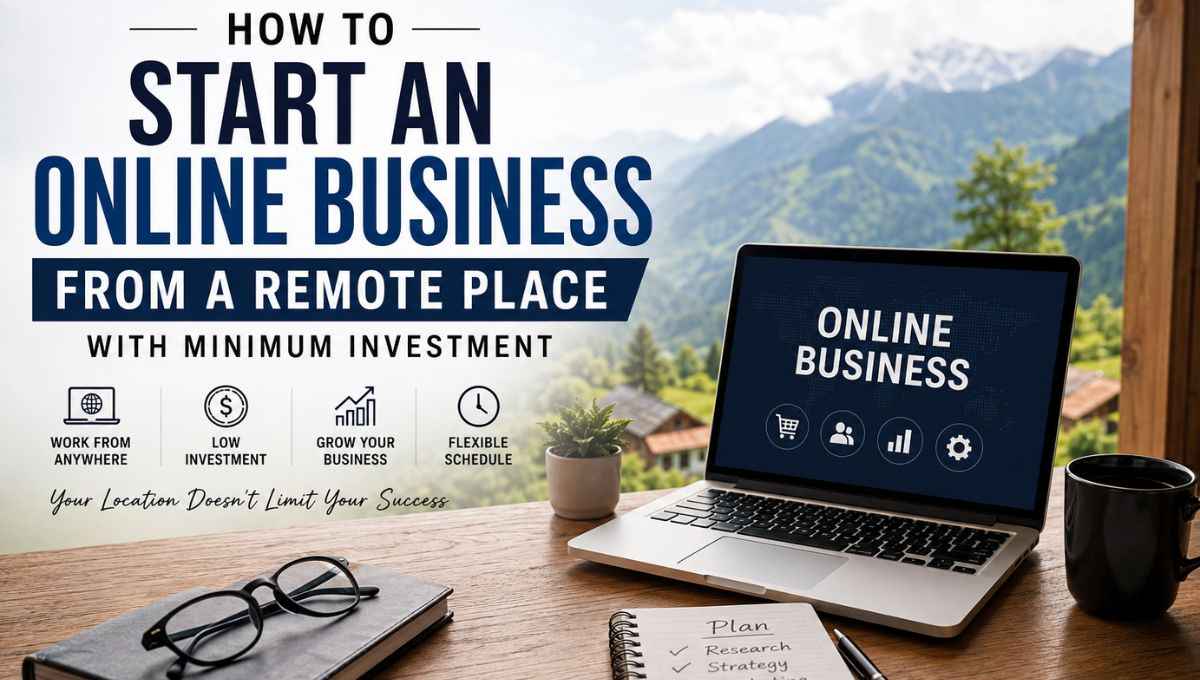
The internet has transformed the way people earn a living. Today, your location no longer determines your opportunities. Whether you live in a small village, a remote town, or a mountainous region, you can build a successful online business with nothing more than an internet connection, determination, and the right strategy.
If you’ve been wondering how to start an online business without spending thousands of dollars, you’re not alone. Many successful entrepreneurs started with very little money and gradually expanded their businesses by reinvesting their profits.
This comprehensive guide will walk you through everything you need to know to launch an online business from a remote place while keeping your investment to a minimum.
Why Start an Online Business?
An online business offers flexibility, low startup costs, and unlimited growth potential. Unlike traditional businesses, you don’t need expensive office space, inventory, or a large team to get started.
Some major advantages include:
- Work from anywhere
- Low startup investment
- Reach customers worldwide
- Flexible working hours
- Multiple income opportunities
- Easy business scaling
These benefits make online entrepreneurship especially attractive for people living in remote areas where employment opportunities may be limited.
Step 1: Identify Your Skills and Interests
Before deciding how to start an online business, take a moment to evaluate your strengths.
Ask yourself:
- What am I good at?
- What do people ask me for help with?
- What hobbies could become profitable?
- What problems can I solve?
Building a business around your existing knowledge reduces learning time and startup costs.
Examples include:
- Graphic design
- Content writing
- Teaching
- Photography
- Video editing
- Digital marketing
- Handmade crafts
- Programming
- Language translation
- Social media management
Step 2: Choose the Right Online Business Model
One of the biggest advantages of starting online is the variety of business models available.
Some of the best low-investment ideas include:
Freelancing
Offer professional services through platforms like Upwork or Fiverr. You only need a laptop and internet connection.
Blogging
Create helpful content around a niche and earn through advertisements, affiliate marketing, and sponsored posts.
Affiliate Marketing
Promote products from trusted companies and earn commissions on every sale generated through your referral links.
Online Coaching
If you’re skilled in fitness, academics, music, or business, you can teach students online using video calls.
Digital Products
Sell products that don’t require shipping, including:
- eBooks
- Templates
- Printables
- Online courses
- Stock photos
E-commerce
Sell physical products through your own website or marketplaces without opening a physical store.
Step 3: Conduct Basic Market Research
Many beginners skip this important step.
Before investing your time, find out whether people actually want what you’re planning to sell.
Research:
- Customer pain points
- Existing competitors
- Product demand
- Pricing
- Trending topics
Free tools like Google Trends and keyword research platforms can help identify profitable niches.
Step 4: Create a Simple Business Plan
A business plan doesn’t need to be complicated.
Include:
- Business goal
- Target audience
- Products or services
- Marketing strategy
- Budget
- Expected monthly income
- Growth plan
A clear roadmap keeps you focused and prevents unnecessary expenses.
Step 5: Build Your Online Presence
Every online business needs credibility.
Start by creating:
- A professional website
- Business email address
- Social media profiles
- Google Business Profile (if applicable)
A clean website builds trust and helps customers learn more about your products or services.
If your budget is limited, start with a simple website using affordable hosting and a beginner-friendly content management system.
Step 6: Invest Only in Essentials
You don’t need expensive equipment in the beginning.
Basic requirements include:
- Laptop or desktop
- Stable internet connection
- Smartphone
- Free productivity software
- Free design tools
- Cloud storage
Avoid purchasing expensive software until your business starts generating revenue.
Step 7: Learn Digital Marketing
Knowing how to start an online business is only half the journey. You also need customers.
Some free marketing methods include:
Search Engine Optimization (SEO)
Write useful articles that answer customer questions.
SEO helps your website receive organic traffic from search engines over time.
Social Media Marketing
Share valuable content consistently on platforms where your audience spends time.
Email Marketing
Build an email list and stay connected with your audience through newsletters and special offers.
Video Marketing
Short videos can significantly increase brand awareness and customer engagement.
Step 8: Focus on Customer Value
Many new entrepreneurs try to sell immediately.
Instead, build trust first.
Provide:
- Helpful blog posts
- Free resources
- Tutorials
- Guides
- Educational videos
People buy from businesses they trust.
Step 9: Automate Whenever Possible
Automation saves both time and money.
Useful automation tools include:
- Email scheduling
- Social media scheduling
- Customer support chatbots
- Invoice generation
- Payment processing
Even free versions of these tools can significantly improve productivity.
Step 10: Reinvest Your Profits
Instead of spending your first earnings, invest them back into your business.
Possible investments include:
- Better website hosting
- Professional branding
- Paid advertising
- Advanced software
- Skill development
- Outsourcing repetitive tasks
This approach accelerates long-term growth.
Challenges of Running an Online Business from a Remote Place
Starting from a remote location has unique challenges.
These may include:
- Slow internet
- Limited networking opportunities
- Power interruptions
- Shipping delays
- Fewer local business resources
Fortunately, these obstacles can often be overcome with planning, backup internet options, cloud-based tools, and digital collaboration platforms.
Common Mistakes to Avoid
Many beginners make avoidable mistakes.
Some of the biggest include:
- Choosing too many business ideas at once
- Ignoring SEO
- Giving up too early
- Spending excessively on unnecessary tools
- Not understanding the target audience
- Failing to build an email list
- Copying competitors instead of creating unique value
Learning from these mistakes can save both time and money.
Success Tips for Beginners
Here are some practical tips for long-term success:
- Stay consistent.
- Continue learning new skills.
- Build genuine relationships with customers.
- Focus on solving problems.
- Track your business performance.
- Improve your website regularly.
- Stay updated with industry trends.
- Be patient—online businesses take time to grow.
Final Thoughts
Learning how to start an online business doesn’t require a large budget or a big-city address. With determination, the right skills, and smart planning, anyone can build a successful online business from a remote location.
Start small, keep your expenses low, and focus on creating value for your audience. As your customer base grows, you can gradually expand your offerings and invest in scaling your business.
Remember, every successful entrepreneur started somewhere. The most important step is simply getting started. With consistency, continuous learning, and a customer-first mindset, your online business can grow into a sustainable source of income, no matter where you live.
For even stronger SEO performance, I can also provide a SEO package including an FAQ section with schema-ready questions, internal linking suggestions, image alt texts, a slug, and recommended keywords (LSI/semantic keywords).